
Estate and downsizing clearances, Northern Beaches
Clearing a family home is nothing like clearing a garage, and we never treat it as the same job. It moves slower, it starts with what stays rather than what goes, and nothing is lifted until you've heard the one figure for the whole house and said yes. Most people who write to us about this are doing it for a parent. However you've arrived here, there's no hurry on this page.
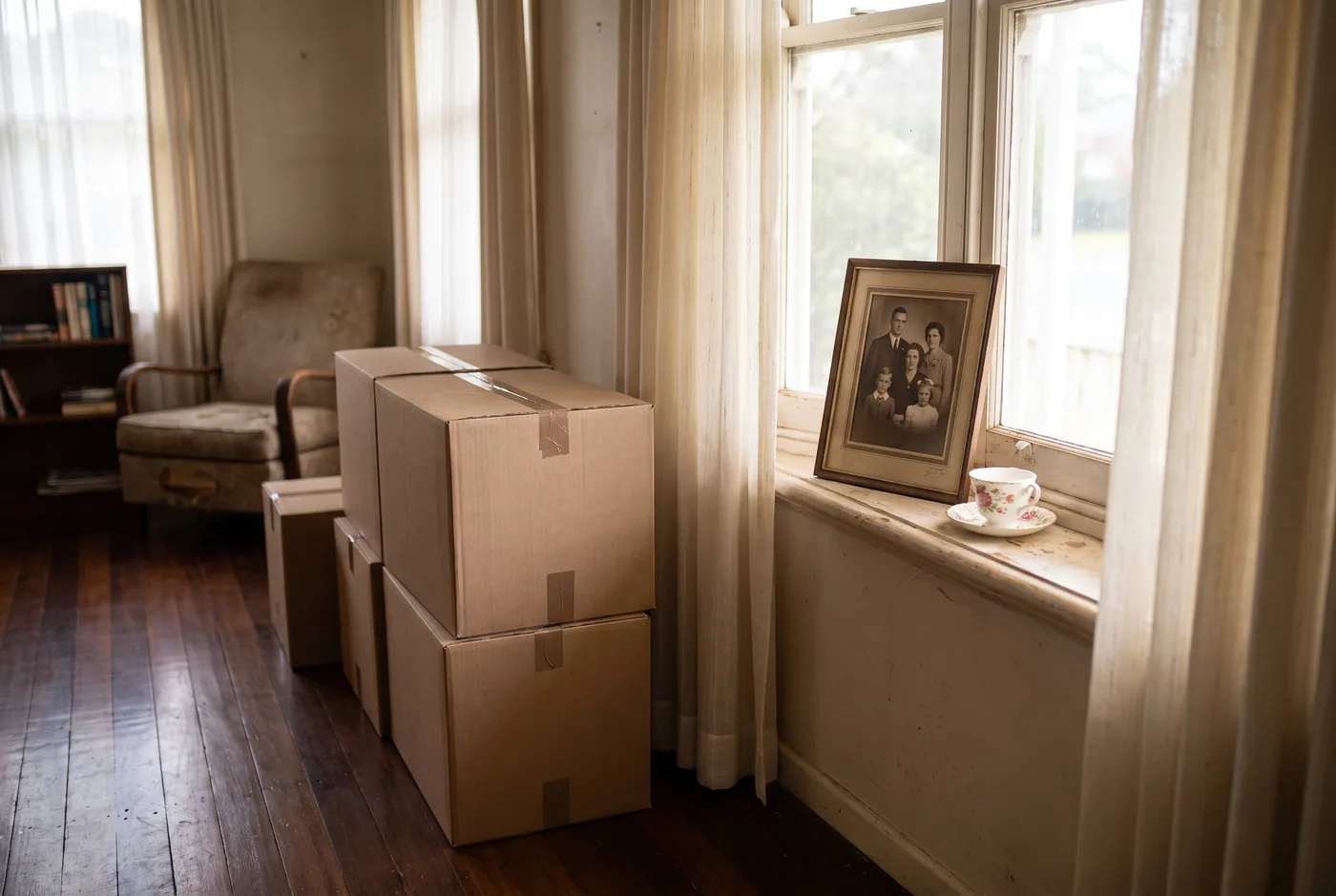
Different work from the rest of our week
Most of our days are garages, sheds and renovation debris: brisk work, done by lunch. A house that held one family for forty years is not that, and the difference isn't the size of the load. It's that half of what's in the house matters to somebody, and it isn't always obvious which half.
So the same peninsula crew works a different way. Nothing goes to the truck on the first visit. We walk the house with you first, agree what the whole job costs before anything moves, and set apart the things that should never travel with the rest. Most of this work comes to us from the long-held streets around Avalon, Newport, Bayview and Collaroy Plateau, and it usually begins with a son or daughter getting in touch from somewhere else, about a house they grew up in.
What a full clearance takes care of
- The walk-through first: through every room with you, or with whoever holds the keys, before anything is decided.
- One figure for the whole house, settled at the walk-through, ahead of any lifting. It covers the crew, the trucks, every tip and transfer fee, and the sweep-through at the end.
- The set-apart pass before the first carton moves: anything personal waits with you, not with us.
- Furniture and whitegoods with life left in them offered where they'll do some good, a charity or a new home where one can be found. We'll tell you plainly what nobody will take, rather than promising it all finds a home.
- Everything else sorted into its proper streams on the truck: green waste, metal, e-waste, general. A house never travels as one mixed load.
- Room by room, across whatever visits suit the family. It doesn't have to be one long loud day.
Paint, chemicals, gas bottles and anything that looks like fibro get set aside for licensed hands, the same as on any job we do. Where each stream actually goes is written up here.
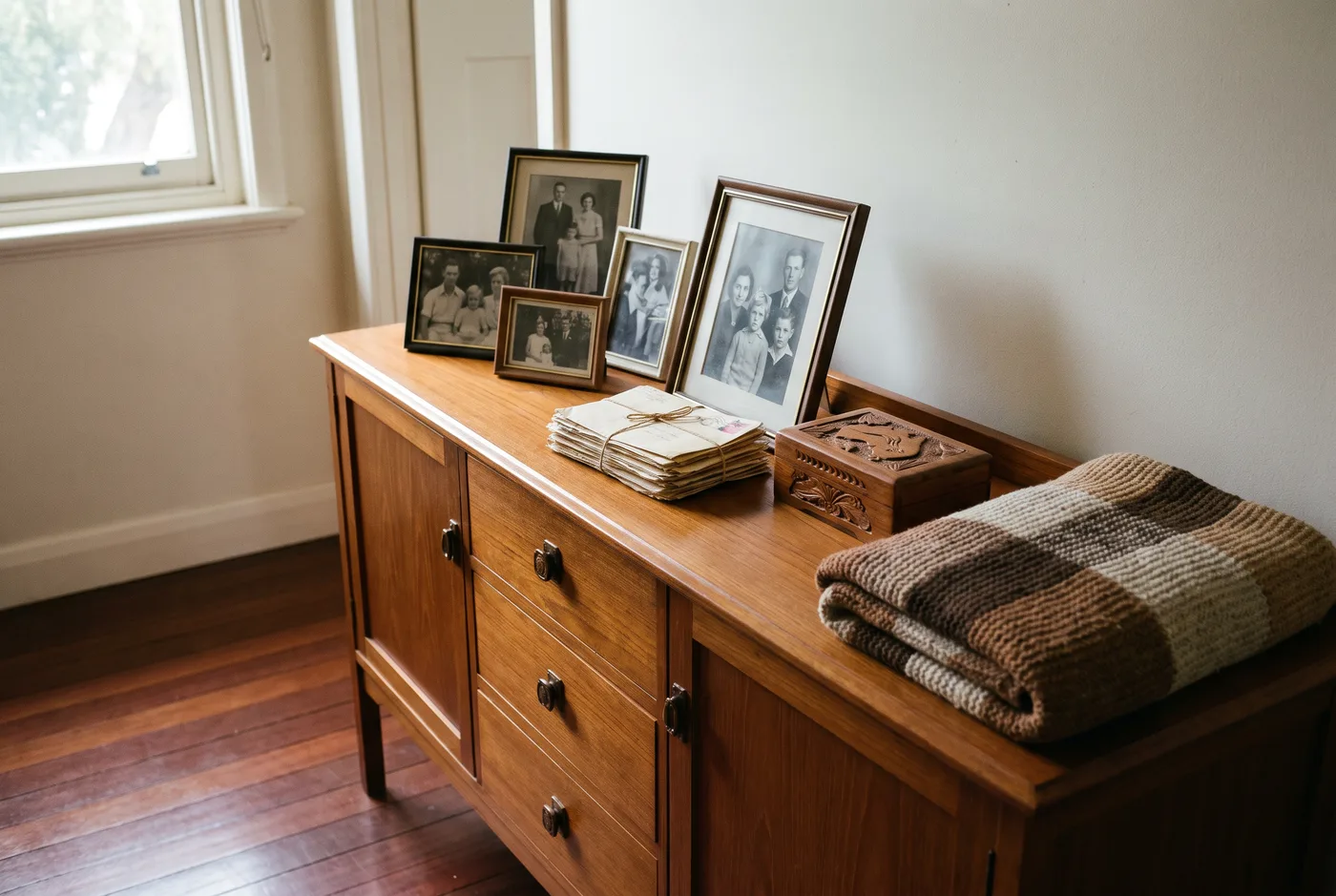
The set-apart things
Before anything is carried, we walk the house first for the things that should never reach a truck: certificates and deeds, photographs and albums, letters, anything worn or engraved, medals, the address book, the box in the wardrobe nobody has opened in years. They're gathered in one place and they stay in the house until you've seen them.
The rule when we're not sure is simple: it goes in the set-aside, and you decide. We'd rather show you a biscuit tin of receipts than guess wrong about what a biscuit tin holds.
Three versions of the same careful job
A deceased estate
Often managed from another suburb, another city, another state. Nothing needs sorting before we're involved, and nothing needs deciding on the walk-through. If probate or family matters set the timing, we fit around them and hold our figure while you do.
Downsizing
You're there, and half the house is coming with you. We clear only what isn't making the move, work around the moving company's dates, and keep the keep pile exactly where you put it. The house empties without the move getting tangled in it.
A move into care
Usually the one with the least warning and the most feeling in it. The house may need to be ready to lease or sell while everyone is still catching up. We can go gently and still meet the date; the two aren't opposites.
What happens, and what never does
What happens
- A conversation about the house and where things stand. Write a few lines, we ring you back.
- The walk-through, with you or with whoever can open the door: the agent, a neighbour, a sibling who lives closer. If you're far away, we can walk it on a video call.
- The figure for the whole job, in writing, before anything is lifted.
- The set-apart pass, then the clearing, room by room, on days that suit the family.
- The sweep-through at the end: floors swept, windows opened, the house light and ready for the agent's photographs, the settlement, or simply the next conversation.
What never does
- Nothing is lifted before the figure is agreed, and the figure doesn't move once it is.
- Nothing that looks personal leaves without being shown to you. Unsure means set aside, always.
- No skip on the front lawn and no pile on the verge. Everything goes from the door to the tray, and what the street sees is a plain truck and a quiet crew.
- Nobody stands over you while you decide. A room can stay shut and keep for the next visit.
- No clock on the wall. If the house needs three slow mornings instead of one long day, that's how we'll do it.
Why nothing sits out the front
The council's kerbside collection is a good scheme for a garage tidy-up: two bookings in any twelve months, three cubic metres each. A family home of forty years is past that allowance before you've finished the second bedroom, so the arithmetic rules it out on its own.
But the better reason is privacy. A kerb pile from a family home tells the whole street what's happening inside it, and it gets picked over by strangers overnight. Nobody should watch a parent's furniture wait on the verge in the weather. On our jobs it never does: everything leaves in the truck it's sorted on, and the sorting happens with the tray, not the lawn.
Collection scheme details: Northern Beaches Council, bulky goods collection.
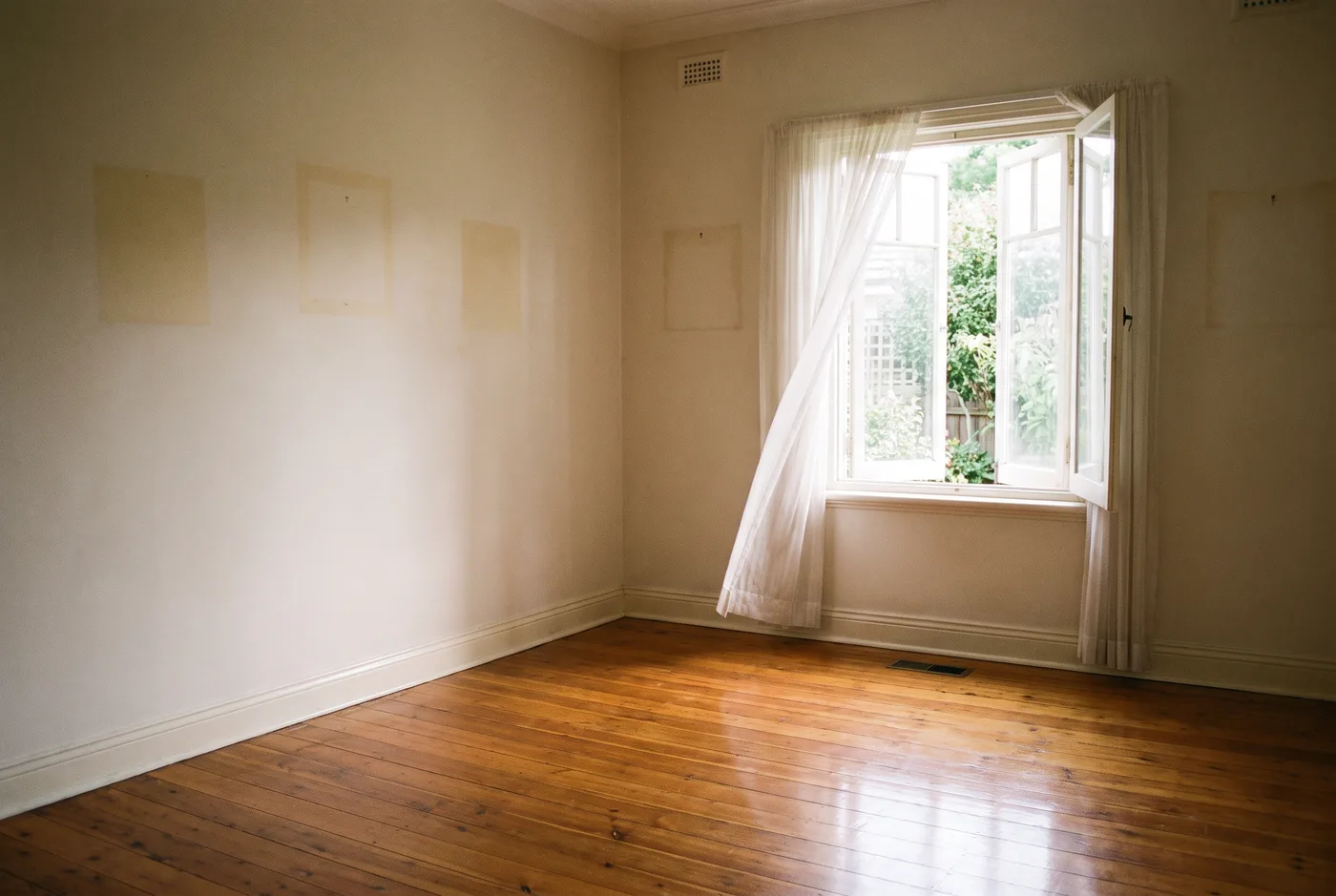
How the house is left
The final morning is quieter than the others. The last rooms are carried, the floors are swept through, and the windows go up for a while so the house breathes before it's locked. The marks where the pictures hung stay on the walls; everything else is done.
Some families walk it with us one more time. Some would rather have photographs of each room and hear the door was locked behind us, which is exactly what happens when this is being managed from a distance. Either way it ends the same: a house that's ready for whatever comes next, and a set-aside that went home with the right people.
If you want the whole sequence laid out step by step before you write, the calm version is here.
The questions people are hesitant to ask
We're interstate. Can this really be done without us there?
Yes, and it often is. The agent or a neighbour holds the keys, the walk-through runs on a video call if you'd like to watch it live, and you get photographs of the set-aside and of every room as it's finished. Nothing personal is decided without you; distance just changes how we show you things, not whether we do.
Mum's still living in the house. Is that a problem?
Not in the least, and it shifts our manners more than our method. We work one room at a time, keep pathways clear and the kettle reachable, and nothing leaves that she hasn't agreed to. Downsizing around someone still at home is common work for us, not an exception.
What will it cost?
One figure for the whole job, given after the walk-through and ahead of any lifting. That figure carries the crew, the trucks, every tip fee and the final sweep, and it doesn't move once agreed. There's no price list on a page like this because no two houses hold the same forty years; the walk-through is what makes the figure honest.
How long does it take?
As long as it needs. A whole house is usually more than one visit, and the pace is set by the family, not the crew. If there's a settlement or lease date we plan backwards from it and tell you plainly what fits; meeting a date and rushing a family are different things.
What happens to furniture that's still good?
Good pieces are offered where they'll be used, a charity or a new home where one can be found, and we'll tell you honestly which pieces nobody will take rather than let you imagine otherwise. What can't be passed on is sorted into its proper streams, never just tipped as one load.
What if you find something we didn't know about?
It goes in the set-aside and you hear about it, whether it's a ring, a bundle of letters or a tin of pound notes. That's the whole point of the rule: nothing is guessed at, and finds belong to the family, always.