
Green waste removal, Northern Beaches
Half the blocks on this peninsula back onto bush, and the bush doesn't stay on its side of the fence. When the prune, the palm drop or the cleared corner makes a pile the green bin couldn't dent in a season, we cut it down, carry it out and take the lot in one visit, as a sorted green load, at one figure you'll hear before a single thing is lifted.
cut vegetation · travels green, tips green · lawn raked after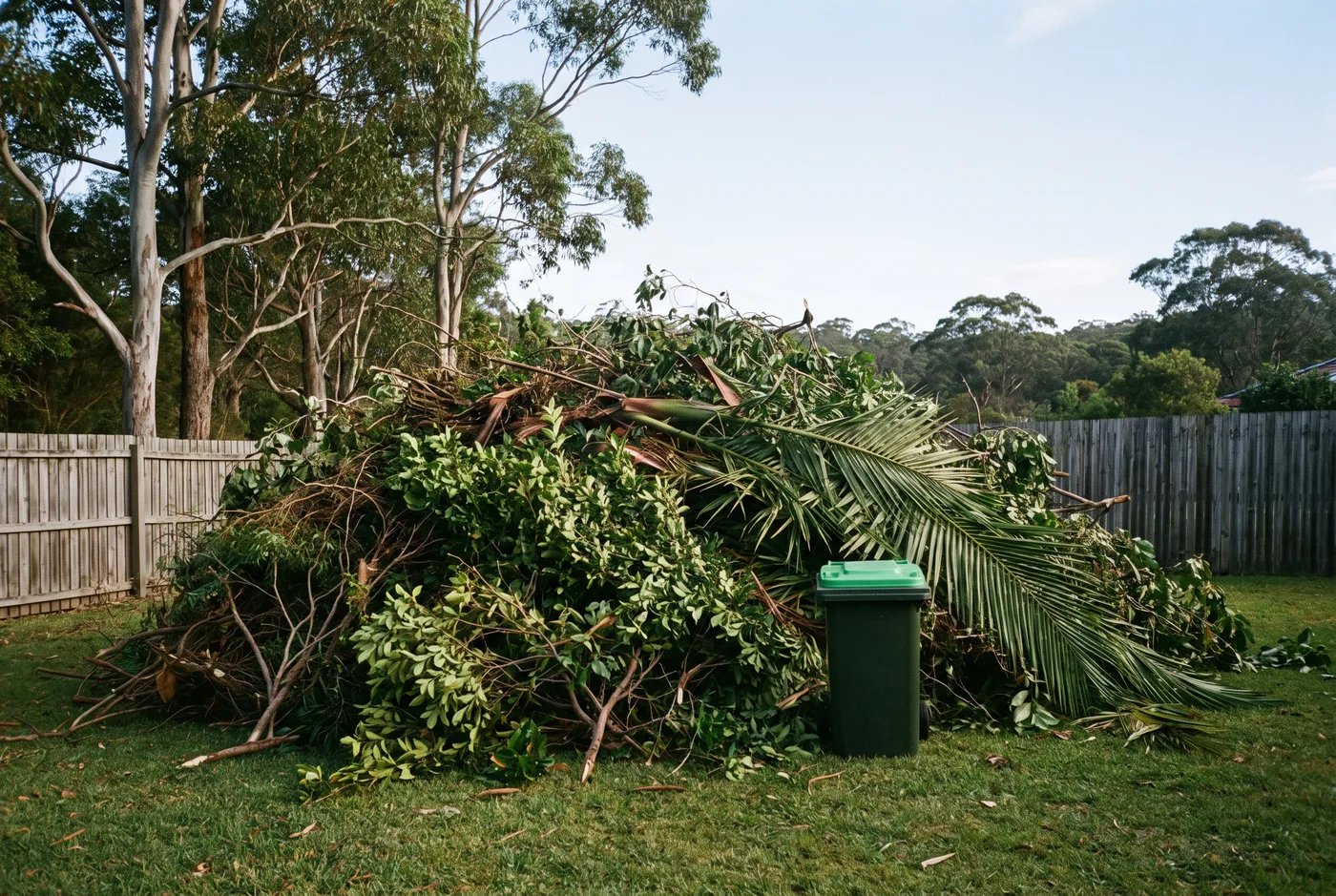
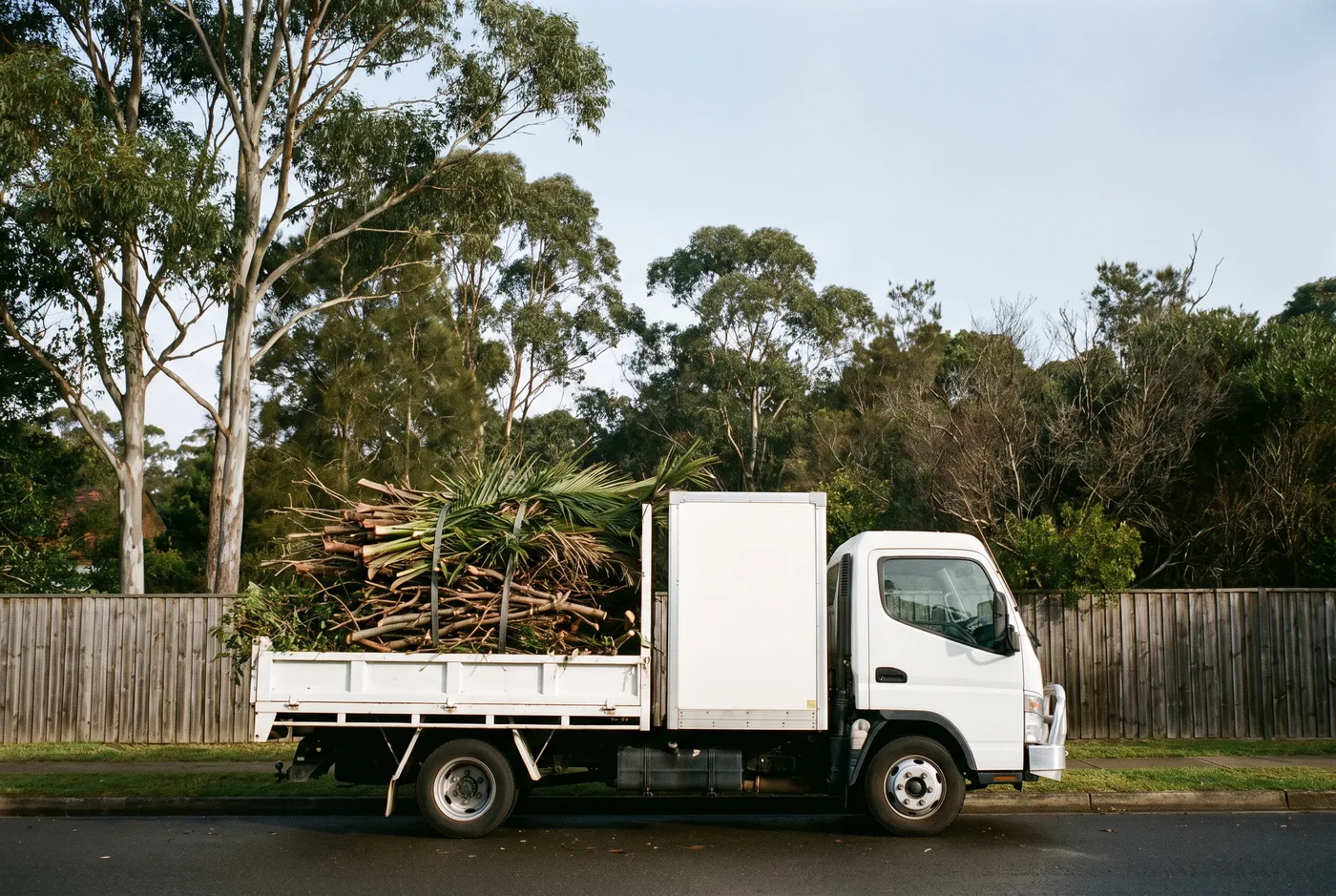
The four piles this page gets booked for
The prune that got away
The hedge that skipped two seasons, the bottlebrush over the clothesline, the annual cut-back that turned into a full weekend. Nothing on a bush-backed block stays trimmed by itself, and by the time it's all down, the heap is taller than the fence it came off.
The palm drop
Cocos and cabbage-tree palms shed all year, and a frond doesn't fold, snap or compost so much as lie there being a frond. Two palms' worth of drop is a trailer load on its own, and the bin lid won't close over a single one of them.
The corner that went wild
Privet, lantana and morning glory don't ask permission, and the back corner they claim always yields three times the pile it looked like standing up. Clearing it is half cutting, half dragging; the dragging half is ours too.
The morning after a blow
When a big southerly or an east-coast low drops limbs across the yard, we book the tidy-up like any other job: what's on the ground, gone. Anything still attached to the tree stays an arborist's work, and we'll say so rather than reach for it.
- palm fronds
- hedge trimmings
- lopped limbs
- lantana + privet
- bamboo
- seed pods + leaf litter
- the woodpile that never got burnt
Cut, carried, loaded green
A green load is more handling than a furniture load, so the figure covers the handling, not just the truck space:
- The cutting down. Anything too long for the tray gets cut to size on the ground, by us, on the day.
- The dragging out. Back corner, side path, down the drive: the pile doesn't need to move to the front before we arrive. Where it fell is fine.
- Loading as a separated green load, never tossed on top of general waste.
- The green-waste gate fee at the facility. Our cost, inside the figure.
- The rake-over. The patch of lawn under the pile gets raked off, not left flat and yellow with a ring of twigs.
Two honest keep-asides. Treated pine, painted timber, sleepers and old fence palings look like garden waste and aren't: they travel the same visit as a general load, sorted on the truck. And soil, turf and rock are a different, heavier conversation, so mention them in the enquiry and the figure will include them properly instead of surprising everyone on the day.
The figure itself is set per job, after we've seen the pile or your photos. How that works, in words.
The green bin does steady. It doesn't do sudden.
The green-lid bin earns its keep at what it's for: the week-by-week trim, one binful at a time. What it can't do is absorb an afternoon. A proper prune makes more green waste in three hours than the bin swallows in a month, and the council's bulky-goods cleanup is no help either, because garden vegetation isn't on its list: branches and prunings at the kerb get left there.
So a real pile has exactly two honest paths: feed it to the bin a slice at a time for the rest of the season, or have it gone in one booked visit as one sorted load. This page is the second path.
Cleanup rules: Northern Beaches Council, what we can and can't collect. Item-by-item version: the Kerbside Forecast.
Travels green, tips green. That's the claim.
A load that leaves as sorted green waste goes to a facility that receives garden organics and processes them into mulch and compost products. That's the standard path for the stream, and it's the reason we load green separately instead of burying it in a mixed load: a clean green load costs less at the gate than the same load mixed, and that flows into the figure we name.
What you won't read here is a recycling percentage. We don't measure what happens to every branch after the weighbridge, so we don't publish numbers about it. The load travels green and is tipped green: that's the claim, because that's the part we control. The stream-by-stream version is in the guide.
Asked over the pile
Do I need to cut anything up or bundle it first?
No. Cutting down to liftable and dragging out of the corner is the job, not your homework. The only prep worth doing is pointing out anything near the pile that isn't going, like the stack of edging timber that looks suspiciously similar.
Can you take the tree down while you're here?
No, and be wary of anyone with a truck who says yes. Felling and climbing are an arborist's trade, insured and qualified separately, and we don't pretend at it. Once it's on the ground it's ours: plenty of our green loads are the leavings of tree work that didn't include take-away.
The pile's been sitting there since summer. Still a green load?
Yes, and dry usually travels better than fresh: lighter, and it packs down. We wear gloves and lift old piles from the edges first, because a bush-backed pile that's sat a season has usually taken tenants. Skinks, mostly.
Does rain change the figure? Wet green must weigh more.
It weighs plenty more, which is exactly why the figure comes from reading your load, never off a rate card. Once named, it doesn't move: a week of rain between the quote and the visit is our problem, not yours.
Can the garage backlog go on the same truck?
Same visit, one figure for both, and it happens all the time: the garden gets cleared because the garage finally did, or the other way round. The streams still travel separately on the tray; the green stays green. The whole-load page covers the garage half.
