
Renovation strip-out debris removal, Northern Beaches
The council's kerbside pickup refuses building material outright, so a reno pile has exactly two honest exits: a skip bin you fill yourself, or a crew that loads it, sweeps the floor and leaves the same day. We're the second one, and this page is straight about when you should pick the first.
between trades or after handover · loaded, swept and gone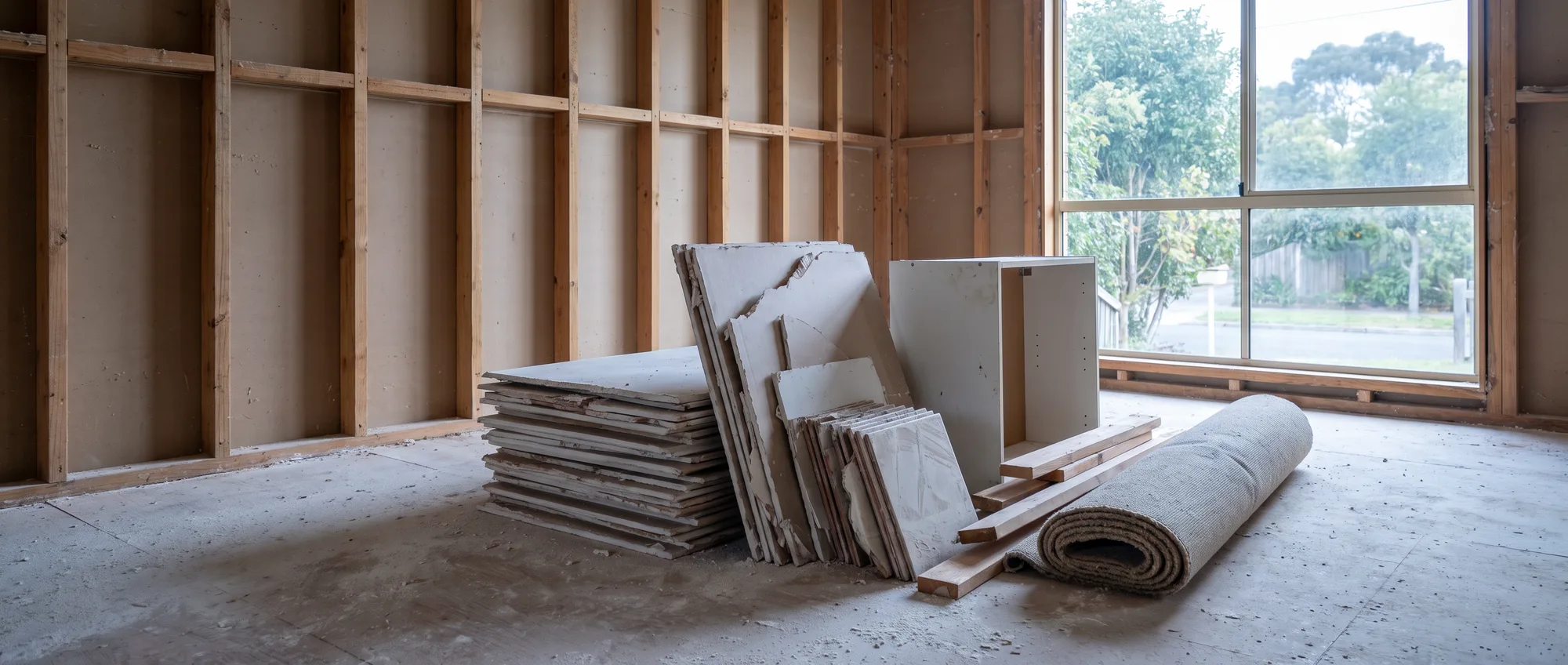
The load a renovation makes
Strip a kitchen or gut a bathroom and the pile writes itself: plasterboard with the screws still in it, wall tiles with the adhesive still on, the carcasses of the old kitchen, timber that used to be a wall. None of it is rubbish the way a mattress is rubbish. All of it becomes "building material" the moment it hits the verge, and the council pickup won't touch a stick of it.
What rides on the truck, sorted as it's loaded:
- Plasterboard, cornice and wall-sheet offcuts, screws and all.
- Tiles on or off the wall, plus the rubble bags from getting them off.
- Kitchens whole: carcasses, doors, benchtops, the sink plumbed to nothing.
- Bathroom fittings: the vanity, the bath, shower screens handled as glass.
- Framing timber, skirting, architraves, doors and their jambs.
- Carpet, underlay and the tack strips nobody misses.
Wall ovens and wired-in appliances ride separately as e-waste to a licensed facility, and metal fittings go out as scrap. Paint, chemicals and gas bottles stay with you for a proper drop-off; the stream-by-stream why lives here.
The council's own list: what we can and can't collect. It's not personal; the scheme was never built for renovations. Item-by-item version of your pile: the Kerbside Forecast.
Skip bin or truck-and-two, honestly
Nobody standing in a gutted kitchen is comparing us to the council. You're comparing us to a skip, so here's that comparison played straight.
| A skip bin | Truck-and-two | |
|---|---|---|
| Who does the loading | You do, or your trades do between their actual jobs | Our crew, from wherever the debris sits, stairs included |
| Time on the property | Days either side of full, parked on the driveway | The length of one visit; the truck stands only while we load |
| The pile meanwhile | Fills in the open at your pace | Stays put until we arrive, then leaves all at once |
| The shape of the cost | By bin size and days held, with excess weight extra at the gate | By the job: one figure named before anything is lifted, tip fees inside |
| Overfilled | A heaped bin can be left sitting until it's level | The figure covers the pile we quoted, however it stacks |
| Sorting | One mixed bin to one gate | Sorted on the truck: metal out, e-waste to its facility, clean green out |
When a skip is genuinely the better tool
- The demo is yours and slow: you're stripping the place yourself over weeks and want somewhere to put each barrow-load as it happens.
- The job runs long with trades who load as they go: a bin on site for the duration beats ringing anyone twice.
- A machine is doing the loading. Bobcat-and-bin is the right pair for structural demolition, and no crew with gloves competes with it.
If your job reads like that list, hire the skip with our blessing. It's the wrong tool for us to pretend otherwise.
When the truck wins
- The pile already exists and the schedule is standing on it.
- The driveway can't give up its space for a week, or there's no off-street spot to put a bin at all.
- The load is mixed: plasterboard, tiles, an old kitchen, a dead wall oven, half a hedge from the same weekend.
- Nobody on site wants to spend Saturday loading a bin by hand.
One visit, nothing for you to lift, and the figure agreed before we start. The full debris explainer goes deeper on both columns.
Booked into the gap between trades
A renovation runs on its gaps. Demo wraps Thursday, the electrician walks in Monday, and the debris has to disappear in between or the whole schedule stands on it. That gap is the job we're built to catch: name the window in your enquiry and the visit lands inside it.
Three shapes the work usually takes:
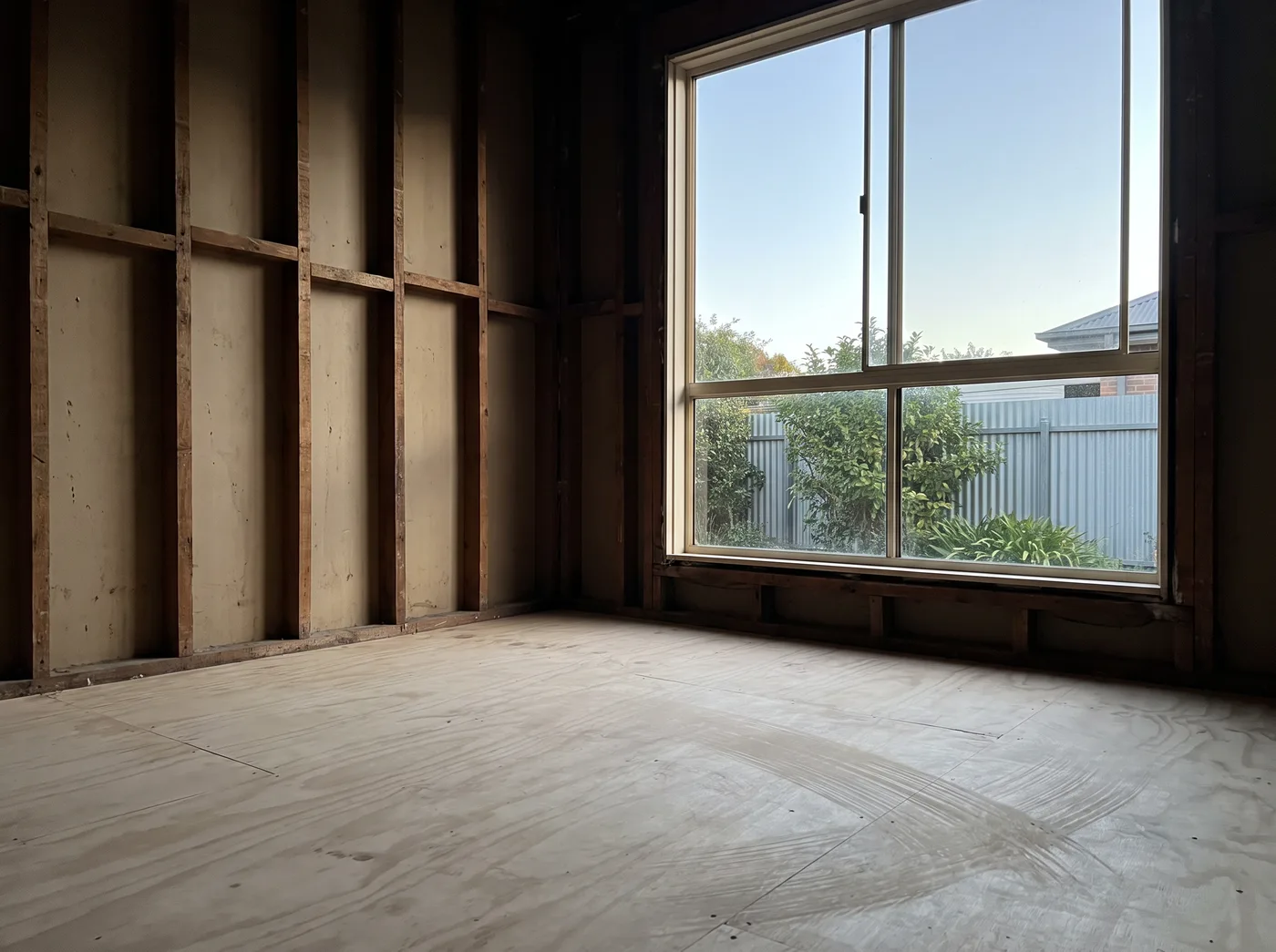
- After demo. The big one: the whole strip-out pile in one load, floor swept, so the next trade walks into a bare room instead of an obstacle course.
- Mid-build top-ups. A smaller load partway through, when the pile starts costing you working room.
- After handover. The builder's gone; the offcuts, packaging and pallets haven't. One visit turns a finished build into a finished house.
By the job, not by the day
Skip pricing rents you a container: so much for the size, so much for the days you hold it, more if it weighs too much at the gate. Reno debris is exactly the load that trips those wires. Tile and rubble are heavy, plasterboard is bulky, and a strip-out produces both at once.
We price the other way around: one figure for the pile in front of us. It covers the carrying out of the house, the loading, the tip fees at construction-and-demolition rates, and the sweep. You hear it before anything is lifted and it doesn't move once agreed.
What sets it, before it's set: how much there is, how heavy the streams are, and how far it has to be carried. Photos of the pile get you most of the way over the phone. The model in full, in words.
The fibro question, before anyone lifts a sheet
Plenty of this peninsula went up in decades when fibro was standard issue. If your reno touches sheeting, eaves or backing boards older than about 1990 and nobody has tested them, stop before the demo does: suspect fibro is a job for a licensed assessor first and licensed asbestos contractors after, and no truck crew should touch it. Including ours.
It matters for the whole load, too: asbestos mixed through ordinary debris contaminates everything it travelled with. So we ask about the age of what came down before we quote, and if the answer is "not sure", we'll point you to Asbestos in NSW before anything else happens. Plain answer, no drama, no load.
Asked from job sites
Can you clear a site at short notice, between trades?
Often. We're one local crew on a short peninsula run, so the gaps in a reno schedule are the kind of booking we can usually catch. Same-day where the run allows; we'll tell you straight on the callback what the run actually allows this week, rather than promise a clock we can't hold.
Do you work for builders, or just owners?
Both. Owner-renovators are half this page; the other half is builders who'd rather keep their crew on tools than on tip runs. Give us the site, the window and roughly what's in the pile, and the figure comes back the same way it does for anyone: all-in, before the job starts.
The skip's already full and there's still a pile beside it.
A call we know well. We take the overflow pile so you're not hiring a second bin for half a load: it goes on the truck in one visit, and the bin keeps whatever it's already holding.
Will you take the old kitchen and bathroom?
Whole. Carcasses, doors, benchtops, the vanity, the bath, shower screens. The wall oven and anything wired-in rides separately as e-waste to a licensed facility, and metal fittings go out as scrap. All of it inside the one figure.
Does the rubble need to be in bags?
It travels better bagged, and if your tiler already bagged it, good. If not, loose rubble is still ours to shovel and load, not yours. It's part of the job and it's priced into the figure like everything else.
What about the leftover new materials?
If it's genuinely good stock, unopened boards, boxes of spare tiles, try to sell it or give it away first; you paid for it. Whatever's left after that is waste, and we're glad to take it with the rest.
